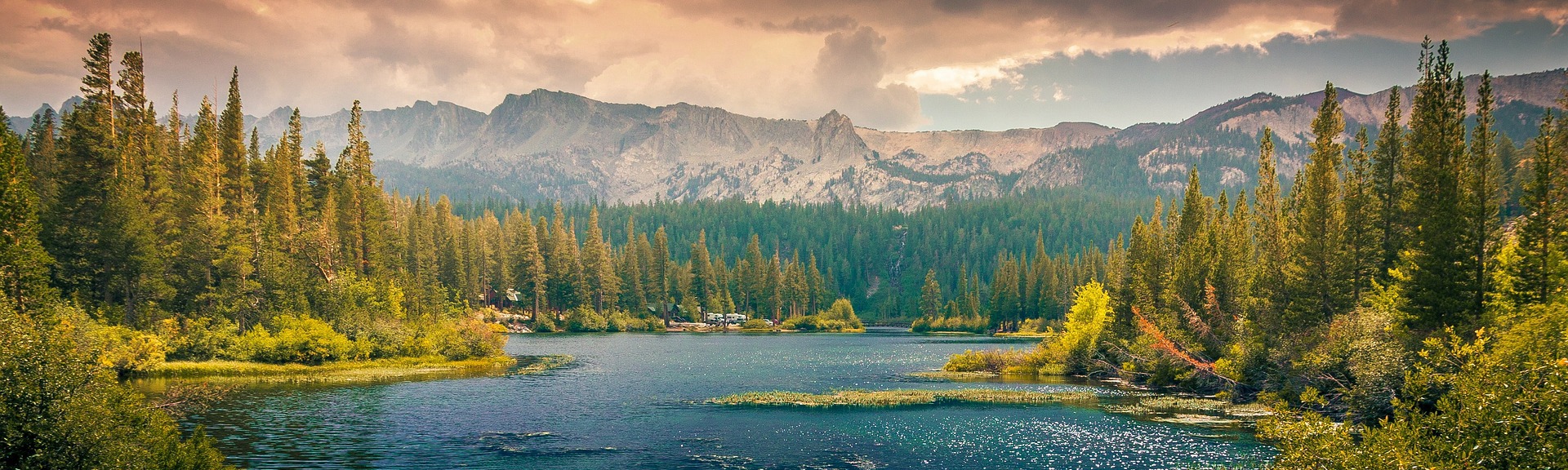

Thunderstorms fill me with awe. They change the world in an instant. On a humid day in summer, the air can be so heavy that even the tiniest movement results in profuse perspiration. But then the storm arrives with power and might, blowing away the heat in seconds. The heavy rains wash the streets sparkly clean. The earsplitting thunder warns of the dangerous lightning. Thunderstorms feel like all heavenly forces unleashed at once. No wonder that the psalmist in Psalm 29 describes the voice of God as cedar-breaking, oak-twisting, desert-shaking thunderstorm. And yet, this glorious and majestic God blesses the people with strength and peace, not destruction and wretchedness. Awe opens our souls to experiences of the divine.

Awe is a hard-to-explain mixture of amazement, terror, and hope. It is one of the most fundamental sensations human beings experience. It is so important that psychologist Dacher Keltner wrote a book about it. It is titled “Awe: The New Science of Everyday Wonder and How it Can Transform Your Life.” In his foreword, Keltner defines awe as the “emotion we experience when we encounter vast mysteries that we donʻt understand”. He argues that not understanding something is very important in human life. It shows us that there is something beyond our own self, something which transcends the world as we know it. And that helps us step out of our own narrow-mindedness, our self-centeredness. It gives us the ability to put ourselves into other people’s shoes. And that leads us towards compassion, gratitude, and generosity – the three marks of a meaningful and joyful life. Awe helps us understand that the world is larger than anything we know. We feel awe when we see giant trees and tiny hummingbirds. Awe-inspiring moments open our hearts to our fellow humans and the created world.

Unsurprisingly, experiences of awe are few and far between in the contemporary United States of America. Not that there weren’t enough things to be inspired about. No, the scientific age did not eliminate awe-inspiring occurrences; to the contrary, the more we know, the more we realize how much we don’t know. We just don’t have the time to wonder anymore, or we are distracted by all the mean-spiritedness we find on social media and in politics. Not only the lives of adults, but also the lives of children are fully regimented. Who has enough leisure and mindspace to experience nature, art, religion, science, and sports in awe-inspiring ways? Keltner worries that our children are awe-deprived. On page 230, he writes: “We are not giving them enough opportunities to discover and experience the wonders of life.” And he connects that directly with the rise among young people in stress, anxiety, depression, shame, eating disorders and self-harm. Because the experience of awe provides the skills for community building, awe-deprived people become lonely and desperate. According to the former Surgeon General of the United States, Dr. Vivek Murthy, one of the root causes for the breakdown of society in our country is the epidemic of loneliness. Murthy writes:
Recent surveys have found that approximately half of U.S. adults report experiencing loneliness, with some of the highest rates among young adults. […]. Loneliness and isolation are more widespread than many of the other major health issues of our day, including smoking (12.5% of U.S. adults), diabetes (14.7%), and obesity (41.9%), and with comparable levels of risk to health and premature death. Together, this represents an urgent public health concern. Every level of increase in social connection corresponds with a risk reduction across many health conditions. Further, social connection can be a proactive approach to living a fulfilled and happy life […] as well as contributing to more-connected communities that are healthier, safer, and more prosperous.[1]
It is detrimental to individual and community health to think of experiences with nature, culture, and religion as some unnecessary luxury which people may engage in if they have enough time and money. These experiences shape our awareness of self and others, and of the natural world, and help us feel connected. They shape our souls and build the foundation for individual well-being and thriving communities. Christians have a wonderful resource to fall back on to learn more about awe-inspiring experiences. It’s called the bible. Our ancestors in faith wrote about their encounters with Divinity, so that we can be encouraged by them still today.
Psalmists especially are awe specialists. For them, God is at the center of everything, and without God, they are nothing. “My help comes from the Lord,” one psalmist assures him- or herself in Psalm 121. They turn to their Creator for lament and help as well as gratitude and praise. In this collection of ancient Hebrew hymns, the writers repeatedly call on heaven and earth to praise God in pure gratitude for their very existence. Awe-struck by divine glory, the joyful, celebratory, all-encompassing song of praise is the only fitting response to the miraculous wonder of creation. In Psalm 148, sun and moon, shining stars, water above the stars, all praise the Lord with all their might. Sea monsters; all the deep; fire and hail; snow and frost; stormy wind acclaim the Lord. Mountains and hills; fruit trees and cedars; wild animals and cattle; creeping things and flying birds; kings and rulers; old and young, they celebrate the Lord without ceasing.

Other psalms describe what sounds to me like a creation choir: The sea roars; the fields exult; and the trees of the forest sing in Psalm 96. Psalm 98 describes how the earth makes a joyful sound; the floods clap their hands; and the hills sing together for joy. 1000s of years ago, people could very well imagine how all nature was bursting with song and jubilation. In contrast, in our modern times, the only thing you might know about the natural world is that it somehow ends up in your belly in the form of a microwave meal and pre-packaged fruit puree. Not only are people in Western society not learning to build relationships with the natural world, but they are also unlearning the skill to gather in community to sing, help, worship, or play ball together. They don’t do it on purpose; it happens to them as a consequence of our disenchanted way of life. That would be fine, if it would make people happier and society a better place to live in. Change is normal and can bring wonderful improvements. But, as Keltner, Murthy, and many others show, the opposite is the case. It makes people lonely, unhappy, and prone to illness, and society, as a whole, is a more unfriendly, even hostile place.
It does not have to be like that. Not only are the psalmists awe specialists. Churchgoers are, too. We gather on Sundays to worship and praise God in song and prayer. We constantly learn astonishing new things about the divine through sermons and Bible studies. During the week, we gather to cook meals for the local community and make quilts for people in need all over the world. Our awe-inspired way of life helps us develop the marks of a life of purpose and joy, even and especially in difficult times: compassion, gratitude, and generosity. And this is only one of many ways to find community. Art, sport, nature, and science can be awe-inspiring. Many faith groups, service clubs, sports teams, choirs, and volunteer organizations welcome you with open arms. Connect with people and connect with nature, and not only will you be happier, but the world will also be a better place.
[1] Vivek H. Murthy, Our Epidemic of Loneliness and Isolation: The US Surgeon General’s Advisory on the Healing Effects of Social Connection and Community, 2023, 9-10.